We built the MSP billing
tool we couldn't find.
Then 2,200 others found it too.
Billwaze started as an internal tool — we needed proper billing for our own managed service work and couldn't find a product that actually modelled MSP contracts. We built it ourselves. Eighteen months later, it runs in 12 countries with over 2,200 active users.
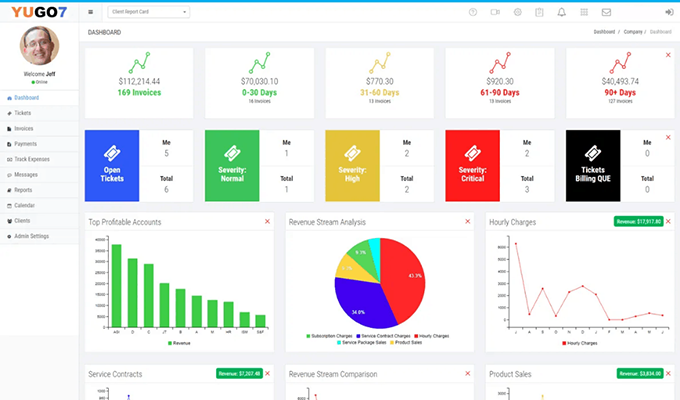
We tried four tools. None of them worked.
Managing service contracts for even a handful of MSP clients exposes the limits of generic invoicing software fast. Retainers with hourly overages. Hardware reselling at margin. SLA tiers that change invoice amounts. Multi-year contracts with annual CPI adjustments. Tools built for freelancers and small retail businesses simply don't have the data model.
We tried four different platforms before deciding to build our own. Each one forced us to work around its limitations with spreadsheet exports and manual calculations — exactly the work we were trying to eliminate. The decision to build Billwaze was made after spending three hours manually reconciling a single month's invoices for a client with twelve service lines.
Built for ourselves first. Opened when it worked.
We built Billwaze for our own use over twelve weeks. No external pressure, no investor timeline — just the discipline of building something we'd have to use every day. We ran our own billing through it for three months before opening a beta.
The beta waitlist filled in two weeks from a single LinkedIn post. What we thought was a niche problem turned out to be universal. The first 50 beta users found 17 real bugs and requested 23 features — 11 of which we shipped in the first month. That feedback loop shaped the product more than any requirements document.
Multi-tenant from the first migration
Every database table has a tenant_id. Every query is scoped. Every background job validates tenancy before touching data. We had operating multi-tenant platforms before Billwaze — the architecture was never a question. Data isolation is non-negotiable in billing software.
Stripe for billing infrastructure, not custom card processing
We considered building payment collection ourselves. We rejected it in the discovery week. Stripe's webhook reliability, dispute handling, and multi-currency support are not things worth rebuilding. We focus on the MSP contract model — the part that no off-the-shelf tool handles — and delegate payments to experts.
Self-serve everything — no sales call to activate
MSP owners are technical. They don't want a demo. They want to sign up, connect their Stripe account, and send their first invoice. The entire onboarding — company profile, contract templates, client import, first invoice — takes under 20 minutes. That decision drove the organic growth.
Every module an MSP actually needs.
- MSP contract templates with retainer + overage + hardware lines
- Automatic monthly invoice generation from active contracts
- SLA tier billing — different rates per priority level
- Multi-currency support with live exchange rate updates
- CPI and annual uplift automation
- Credit notes, partial billing, and pro-rata adjustments
- Built-in time tracker — start/stop or manual entry per client
- Automatic categorisation into billable vs. non-billable
- Hardware and software resale line items with margin tracking
- Usage-based billing hooks for cloud/hosting cost passthrough
- Approval workflow before any time hits an invoice
- Per-engineer and per-client time reporting
- Branded portal — client sees your logo, not ours
- Invoice history, service reports, and contract summaries
- Online payment with saved card and auto-pay option
- Ticket integration — clients can open service requests from the portal
- Usage dashboards showing what they're paying for
- Document storage for SLAs, contracts, and compliance docs
I'd been invoicing clients manually for six years. Three hours a month, every month, turning timesheets into PDFs. Billwaze cut that to fifteen minutes. I know that sounds like a small thing — it's not. That's three hours of my month back, every month, forever.
The lessons from running a SaaS product.
Billing errors are existential
A wrong invoice in an e-commerce app is annoying. A wrong invoice to a paying MSP client is a relationship event. We built a staging invoice preview that emails to the MSP before sending to the client, an audit log on every calculation, and a re-run safety check on all recurring jobs.
Multi-currency is never done
EUR and GBP work fine. AUD with GST adds complexity. UK VAT reverse charge for B2B EU clients adds more. Each new country that adopted Billwaze revealed a tax or format edge case we hadn't anticipated. We now have a dedicated tax rule layer that's independently configurable.
Your best feature requests come from churned users
We set up an exit survey for cancelled accounts. Three of the most impactful features we shipped in 2024 came directly from churn feedback — not from active users who had adapted to the workarounds, but from users who left because the workarounds weren't worth it.
Building a SaaS product?
We built Billwaze as an internal tool and ended up with a product used in 12 countries. We know what it takes to go from idea to scale — because we do it for ourselves too.